
Expressing Concern in Japanese!
\ Learn How to Show Care and Worry Naturally /
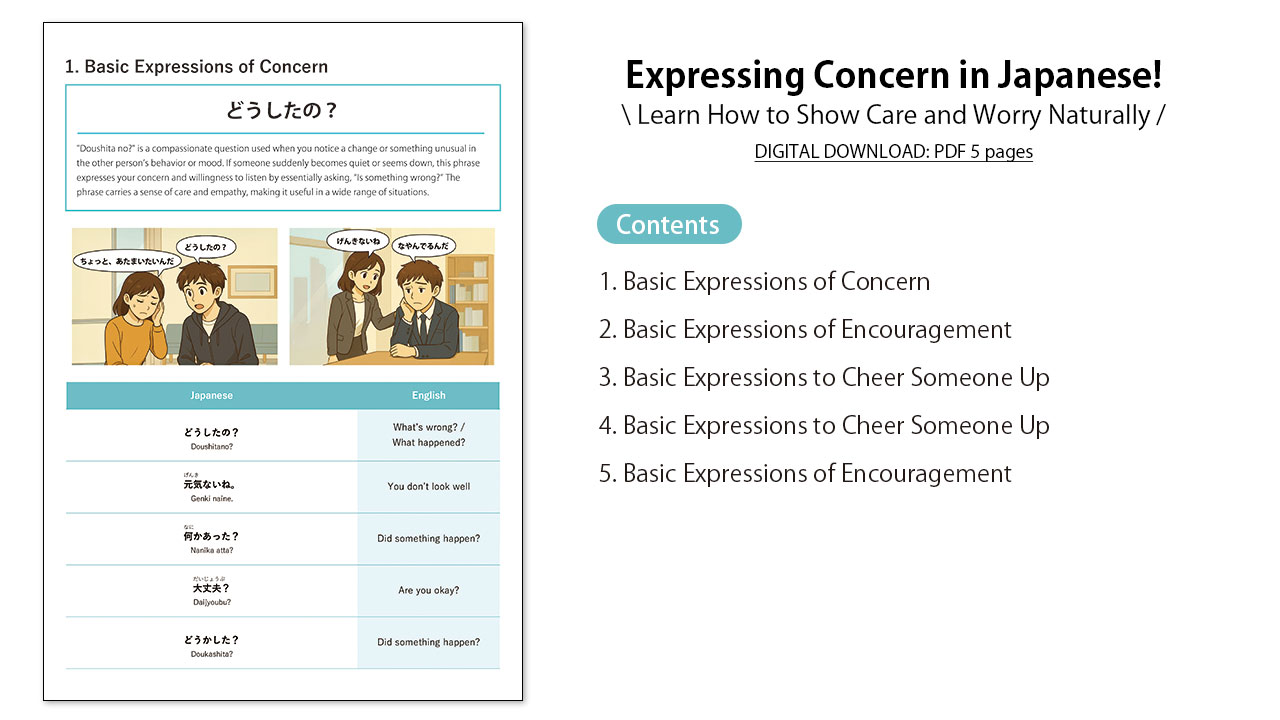
In Japanese, expressing concern and care for others is highly valued. For example, saying “Daijoubu?” (Are you okay?) to someone who seems unwell or sad can help convey your compassion. Japanese culture often prefers indirect and considerate expressions rather than being too direct.

Learning Tips
- A direct “Yes” or “No” isn’t the only right answer!
- Adjust your tone and wording depending on the person you’re speaking to.
- Use softer expressions for difficult “No”s
- Example: “Not right now…” / “I think I’ll pass this time.”
- Even vague expressions can convey your feelings
- Example: “I’m not sure… it’s kind of iffy” = basically means “No”s.
- Use polite language depending on the situation
- n formal situations, say things like “I understand” or “I’m afraid that’s difficult.”
\ Want Full Access + PDF Download? /
- This is a Free Preview Page (Page 1 only)
- You’re currently viewing a free preview.
To access the full 6-page PDF and interactive web version with audio, please choose one of the options below:
What You’ll Learn with This Resource
This resource helps you learn how to express concern, care, and compassion in everyday Japanese. You will gain the skills to respond naturally in situations where someone seems unwell, sad, or in trouble.
Recommended Level
- Lower-Intermediate (JLPT N4–N3)
- This resource is ideal for learners who want to go beyond basic conversation and communicate with emotional sensitivity in Japanese.
Key Features
- Learn 25+ phrases used to show empathy and concern
- Dialogues set in realistic, everyday scenarios
- Simple explanations with English translations
- Includes pronunciation and example responses
Purchase Options & Subscription Access
- Single Purchase (via Ko-fi Store)
-
- Download the full 6-page PDF
- MP3 audio files with native pronunciation (ZIP format)
- Access the complete audio-enhanced web lesson
- Subscribe to Unlock All Resources
-
- Unlimited access to all current and upcoming course materials
- MP3 audio files with native pronunciation (ZIP format)
- Access all audio web pages anytime
Join Japanese Course Member!
This content is part of our Japanese Learning Series. This lesson is available for viewing only.
To download the PDF and audio files, please consider joining our full-access subscription plan.
Benefits of Subscribing:
- Unlimited access to all current & future lessons
- Downloadable PDFs and native audio files
- Bonus content & learning support


